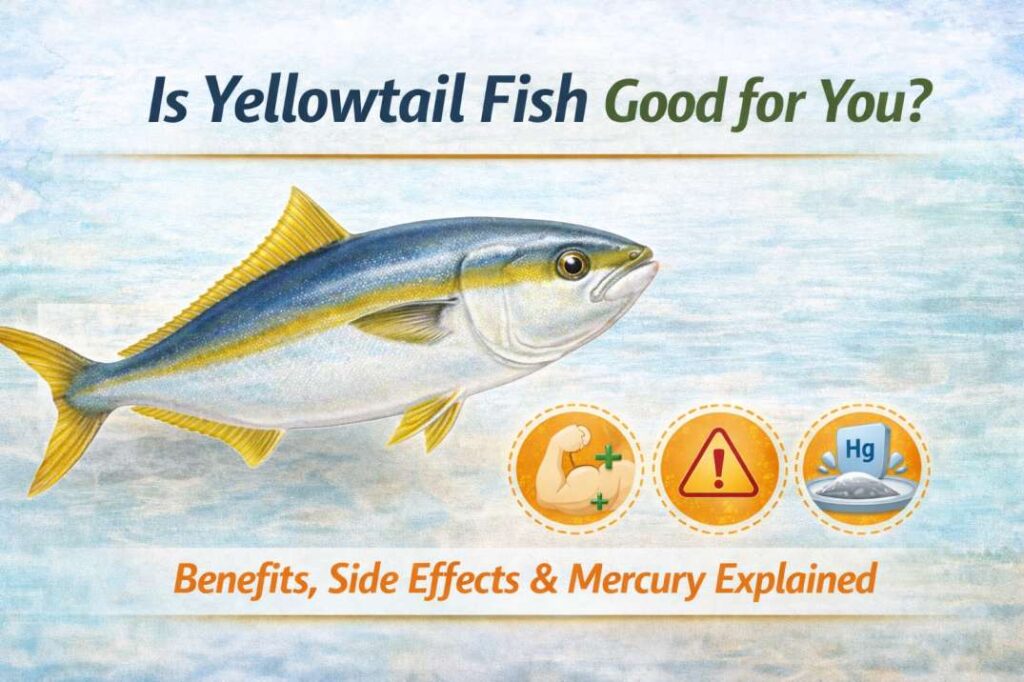
To be honest, I’ve eaten yellowtail fish only a few times, but based on my experience and research, I can say this: “Is yellowtail fish good for you?” Although I’m a fish lover, I still ask myself, “Can I eat it?” And when it comes to yellowtail, the answer is yes, especially when it’s fresh, light, buttery, and full of clean protein.
Many of my friends also ask me, “What is yellowtail fish?” and “Is it healthy to eat yellowtail?” This question is valid if someone doesn’t know much about fish nutrition. So in this post, I’m breaking everything down with honesty and clarity, based entirely on research and my personal experience. My goal is simple: to help you make the right choice for your health.
What You’ll Read in This Post
- 🐟 Yellowtail fish explained in simple words
- 💪 Yellowtail fish benefits & nutrition
- ⚠️ Yellowtail fish side effects & mercury levels
- 🍣 Is yellowtail safe to eat raw?
- 🍳 How to cook yellowtail fish for the best results
What Is Yellowtail Fish?
Yellowtail, popularly known as the “Japanese amberjack,” is a smooth, mild, and rich fish that resembles salmon, and it’s a favorite in sushi, sashimi, and simple pan-seared dishes. It belongs to the jack family and is loved for its soft, buttery texture.
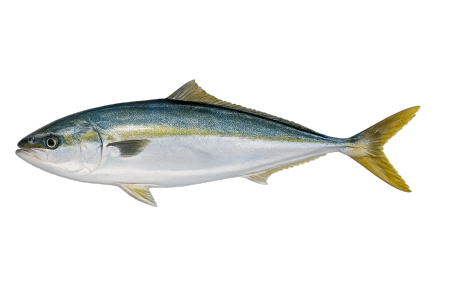
When people search for “yellowtail,” they usually refer to hamachi or buri, two names used in Japan depending on the age and size of the fish.
Although I’ve rarely eaten it, I can say that if you like salmon or tuna, you can’t resist yellowtail. The taste is clean, slightly oily, satisfying, and naturally flavorful, with no excessive seasoning.
Is Yellowtail Fish Good for You?
Without a doubt, yes, yellowtail fish is indeed good to eat. The reasons are clear: it’s a nutrient-rich seafood, boasting a great taste and containing all the proteins the body needs, healthy omega-3 fats, and essential vitamins and minerals.
Many readers ask me if yellowtail fish is good for you, and honestly, the answer is yes, especially when you eat it in moderation. People also search is yellowtail healthy to eat, and I’m thrilled to be writing about such a truly healthy and nutrient-rich fish. Frankly, based on my research, it’s one of the better choices among oily fish.
If you’re wondering whether yellowtail is healthy to eat regularly, the best way is to eat it in moderation. It’s perfectly fine to eat it a few times a week, but it’s not recommended to eat it daily due to the natural mercury levels found in seafood, as in most predatory fish.
Yellowtail Fish Nutrition Facts 100g
Let us know the amount of yellowtail fish nutrition per 100 grams (approx):
- Calories: 140–150 kcal
- Protein: 23–24 g
- Fat: 5–6 g (mostly healthy omega-3s)
- Omega-3 fatty acids: 1,000+ mg
- Selenium, Vitamin A, Vitamin D
- Potassium, Phosphorus, Magnesium
These yellowtail fish nutrition facts explain why athletes, gym-goers, and seafood lovers prefer it.
Yellowtail Health Benefits
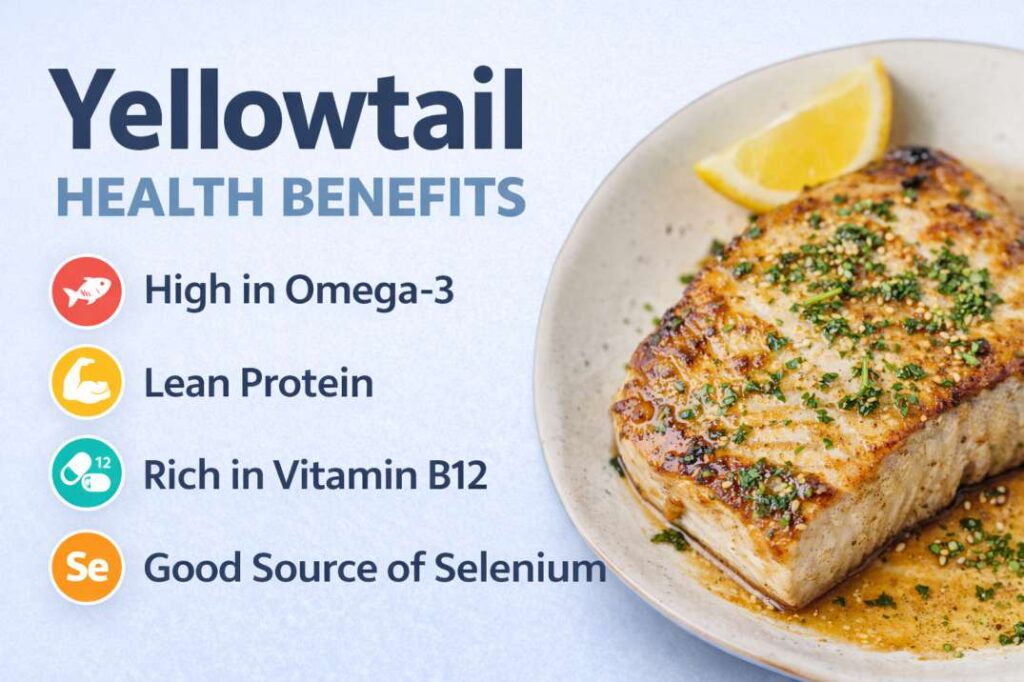
In my opinion, every fish has its advantages and disadvantages. Here are some of the most important health benefits of yellowtail fish that I discovered after researching and tasting it numerous times:
1. Excellent for Heart Health
If you look at its nutrition facts, yellowtail helps balance cholesterol and reduces inflammation in the body due to its high levels of omega-3s.
2. Great Source of Lean Protein
It helps build muscle and improve recovery, energy, and strength.
3. Improves Brain and Mood Function
These omega-3s improve focus and memory.
4. Supports Eye & Skin Health
Vitamin A and healthy fats nourish the skin and naturally improve vision.
5. Boosts Immunity
Selenium and vitamin D boost the body’s immunity and help fight infections. If someone asks me about the benefits of yellowtail fish, I would rely on these based on nutrition data and my experience.
Yellowtail Fish Side Effects
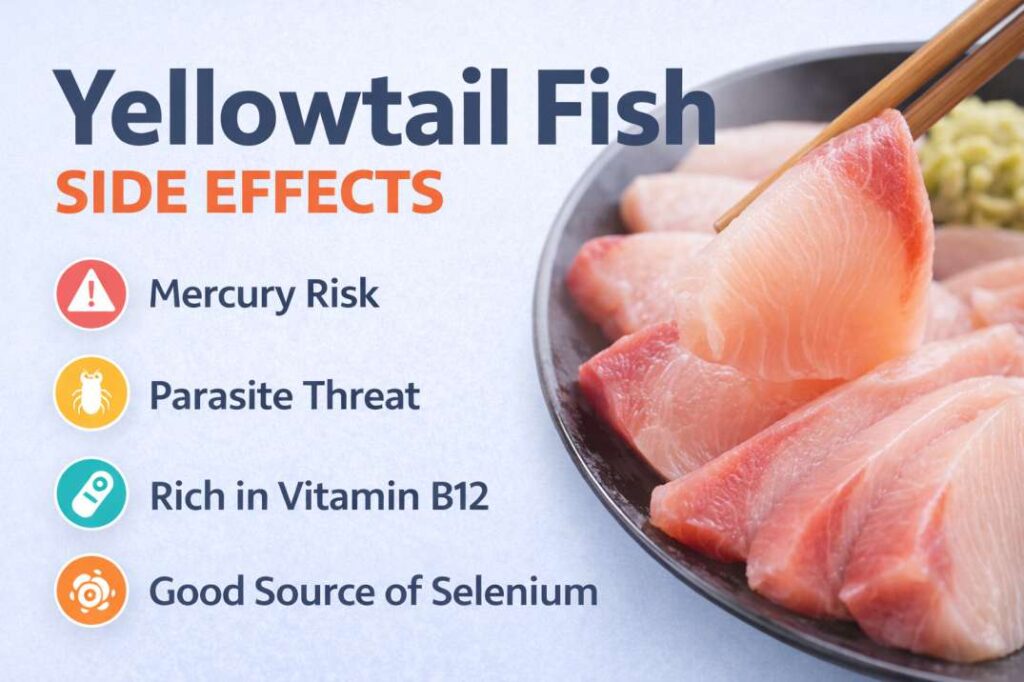
While not many, yellowtail fish do have some side effects. These side effects are associated with all seafood. Yellowtail does not have any significant side effects.
1. Mercury Sensitivity
People with mercury sensitivity should consume yellowtail in moderation. This is best for their health.
2. Allergic Reactions
People with fish allergies may experience itching or a rash. This can happen with any fish.
3. High Sodium in Salted/Processed Yellowtail
Some packaged versions contain excess salt. For most people, these yellowtail side effects are mild. Always buy fresh yellowtail.
Is Yellowtail High in Mercury?
We know that mercury is harmful to the body, so we often try to find out about this before consuming fish. The mercury content in Yellowtail fish isn’t as high as in other seafood. So, you can easily eat it 1-2 times a week. Pregnant women, nursing mothers, and young children should consume it in even smaller quantities or even avoid seafood altogether.
So, when someone asks:
Does Yellowtail Contain a High Level of Mercury?
The correct answer is: just right—not too much, not too little.
Is Yellowtail Safe to Eat Raw?
I’m often puzzled by why people choose to eat raw fish, even though they know it can be a parasite threat. I believe we should cook fish; a little time, a little effort, and a truly amazing taste. In the case of yellowtail, it can be eaten raw, but only if:
- It’s sushi-grade
- It’s properly handled, stored, and frozen
- It’s purchased from a reliable source
Raw yellowtail (hamachi) is very popular in sushi because of its buttery texture.
How to Cook Yellowtail Fish

I’ve cooked yellowtail fish only a few times, but here are my favorite ways I like it best:
1. Pan-Seared (My Favorite)
Season the fish, infuse the pan with butter and garlic, and fry until the outer layer becomes golden, fragrant, and perfectly crisp.
2. Grilled
Just a touch of olive oil with fresh lemon and pepper brings out the natural flavor beautifully.
3. Baked
For a delicate, softer finish, sprinkle herbs and bake it for 12–15 minutes.
4. Yellowtail Teriyaki
A Japanese favorite—sweet and savory. If you’re wondering how to cook yellowtail fish for the “best flavor,” pan-searing always wins for me.
FAQs About Yellowtail Fish
1. Is yellowtail fish good for you daily?
Yellowtail fish is good for you, but not daily. Eat it 2–3 times a week because it contains natural mercury.
2. Is yellowtail safe to eat raw for first-time sushi eaters?
Yes, yellowtail is safe to eat raw only when it is sushi-grade and sourced from a trusted place. Even though raw Hamachi tastes buttery and clean, beginners should know that parasites are a real risk if the fish isn’t handled or frozen correctly. When safety is confirmed, raw yellowtail is one of the best choices for sushi lovers.
Final Words — Is Yellowtail Fish Good for You?
Based on everything I’ve seen, tasted, and researched about yellowtail fish, yellowtail is absolutely good for you—nutritious, clean, and very useful. Its benefits clearly outweigh the side effects, especially when eaten in moderation. As I mentioned earlier, yellowtail has a soft, mild flavor, much like salmon, so this is a safe fish to include in your diet.