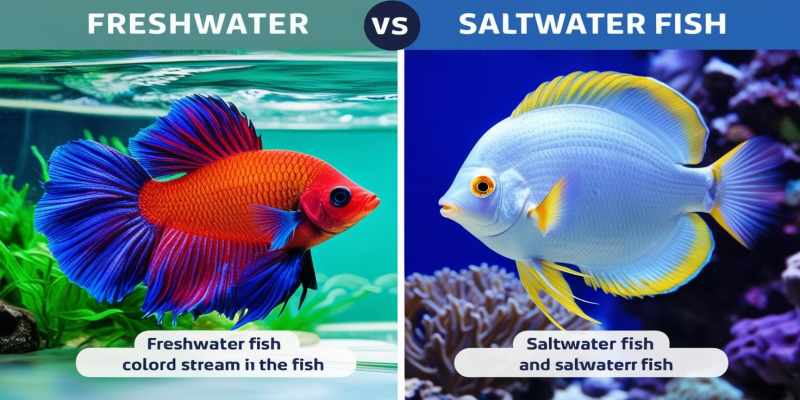
If you’ve ever wondered whether freshwater fish and saltwater fish are really that different, the answer is yes—and the difference goes far beyond just where they live.
Many beginners get confused about freshwater fish vs saltwater fish, but the key difference is how these fish regulate salt and water in their bodies. From the way their bodies handle salt to how they taste on your plate, these fish are built for completely different environments.
And once you understand the science behind it, you’ll realize why choosing between them isn’t just a preference—it’s about biology, nutrition, and even safety.
QUICK ANSWER
Freshwater Fish vs Saltwater Fish: Freshwater fish and saltwater fish differ in osmoregulation, habitat, taste, and nutrition. Freshwater fish gain water through osmosis, while saltwater fish lose water, leading to completely different biological adaptations and health benefits.
What You’ll Get in This Post
- 🌊 A clear comparison of freshwater vs saltwater fish and what truly sets them apart
- 🥗Breakdown of nutrition, health benefits, and mercury differences
- 👅 Freshwater fish vs saltwater fish taste
- ⚖️ Easy-to-understand comparison tables for quick insights
- 🧠 The science behind how fish survive in different water types
- 🐠 Beginner insights on freshwater vs saltwater aquariums
- ❗ Common myths and mistakes people often make
What is the difference between saltwater and freshwater?
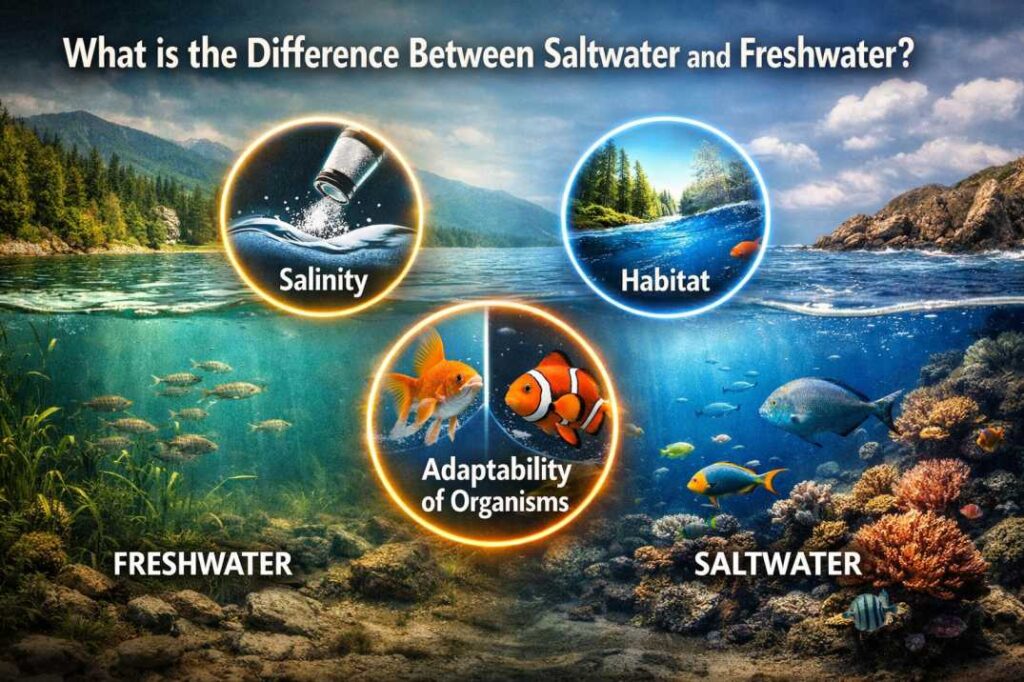
The basic difference between saltwater and freshwater is their salinity and habitat characteristics. This needs to be understood first, if we need to know the difference between fresh water fish and saltwater fish.
- Salinity:
Freshwater: Has a low salt concentration, typically less than 1%. This includes rivers, lakes, ponds, and streams.
Saltwater: Contains a higher concentration of salt, usually about 3.5% salinity, found in oceans and seas. - Habitat:
Freshwater: These ecosystems are typically found inland and include various bodies of water like lakes, rivers, and wetlands.
Saltwater: These bodies exist primarily in coastal areas and open oceans, characterized by their vast size and depth. - Adaptability of Organisms:
Freshwater species are usually more tolerant of temperature and water chemistry changes, while
Saltwater species are typically more sensitive to environmental changes due to their specific adaptations to saline conditions. After this, let us understand the saltwater fish vs freshwater fish biology.
After knowing about the water difference. When comparing Freshwater Fish vs Saltwater Fish, the main differences lie in their adaptability, tank requirements, and cost of maintenance. Let us understand them one by one.
What Exactly Are Freshwater Fish?
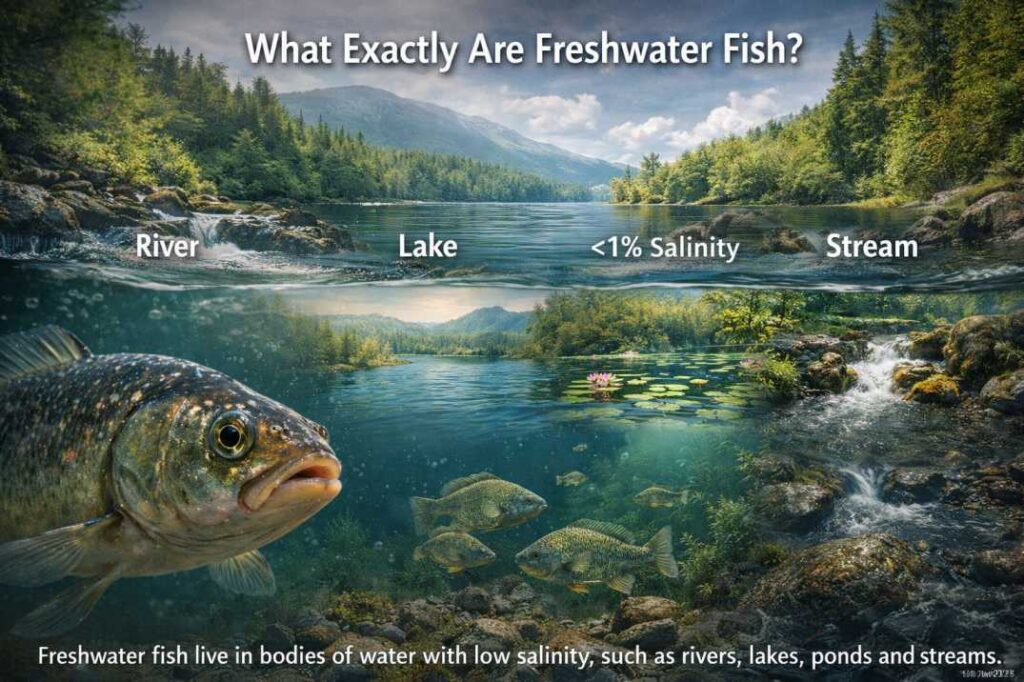
Freshwater fish live in bodies of water with low salinity, such as rivers, lakes, ponds, and streams. These places typically have a salinity of less than 1%.
There are a large number of species of freshwater fish, which vary in size, shape, and behavior. Some popular examples include trout, bass, catfish, and goldfish.
In addition to their ecological importance, freshwater fish are important in human activities as fishing, aquaculture, and as pets in home aquariums.
What is a Saltwater Fish?
Saltwater fish, as their name suggests, live in oceans and seas where the salinity is much higher. The salt level is much higher than normal fresh water. These fish often boast intense colors and striking shapes, and if you’ve ever seen a reef tank, you know how captivating they can be.
Popular saltwater species include:
- Clownfish (like Nemo!)
- Blue Tang (remember Dory?)
- Lionfish, Wrasses, and Butterflyfish
While saltwater fish are gorgeous, they tend to need more care, special equipment, and patience. They’re usually best for aquarists with little experience or who are ready to invest time and money.
The Real Difference: Osmosis and Salt Balance
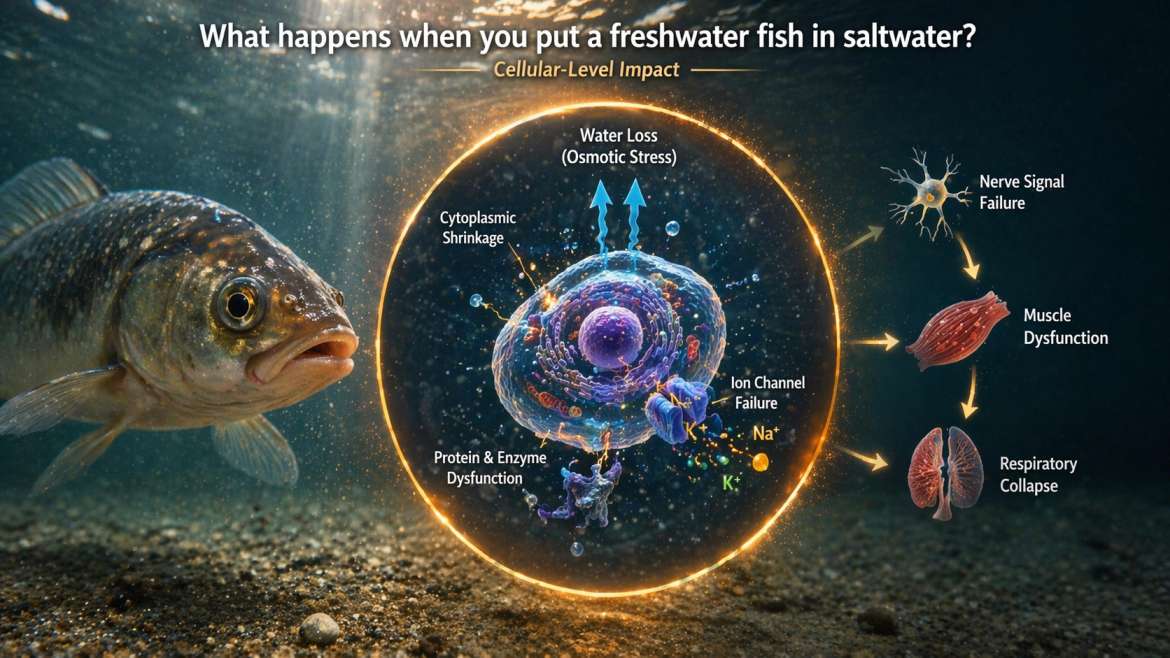
If you think about this more scientifically, the biggest difference comes down to osmoregulation.
Jw=−P(Ψs+Ψp)J_w = -P (\Psi_s + \Psi_p)Jw=−P(Ψs+Ψp)
What this means:
- Freshwater fish live in a hypotonic environment
- Saltwater fish live in a hypertonic environment
👉 This will result in:
- Freshwater fish constantly gain water
- Saltwater fish constantly lose water
To survive:
- Freshwater fish use to excrete lots of dilute urine
- Saltwater fish use to drink water and excrete salt
This single mechanism explains almost every difference between freshwater fish and saltwater fish.
Freshwater Fish vs Saltwater Fish (Quick Comparison)
Here’s a quick breakdown of how these two types of fish differ:
| Feature | Freshwater Fish | Saltwater Fish |
| Habitat | Rivers, lakes | Oceans, seas |
| Osmosis | Water enters the body | Water leaves the body |
| Urine | Dilute, large amount | Concentrated, small amount |
| Omega-3 | Lower | Higher |
| Water Salinity | Low (<0.05%) | High (~3.5%) |
| Aquarium Cost | Lower | Higher |
| Color Variety | Moderate | Often very vibrant |
| Maintenance Level | Easier | Complex |
| Hardiness | More tolerant of changes | Sensitive to water quality |
| Diet | Insects, plants, and small crustaceans | Algae, small fish, invertebrates |
| Freshwater Fish vs Saltwater Fish Taste | Stronger in Taste | Sweet in Taste |
| Freshwater Fish vs Saltwater Fish: Health Benefits | Much beneficial to health | Less but still healthier |
Still wondering what actually happens when a freshwater fish is placed in saltwater?
Read this next:
What Happens to Freshwater Fish in Saltwater? (Step-by-Step Science Explained)
This explains the exact biological process inside the fish, something most people completely misunderstand.
Freshwater Fish vs Saltwater Fish Nutrition Facts
Saltwater fish generally contain higher levels of omega-3 fatty acids, which support heart and brain health. Whereas if we look at Freshwater fish, however, they can be rich in calcium, vitamin D, and local nutrient diversity, so it is clear that saltwater fish are good for heart health, and freshwater fish are good for a balanced diet.
Freshwater Fish vs Saltwater Fish Health Benefits
Consuming saltwater fish is more beneficial to health. It has various benefits for the human body, like the heart, skin, immunity, etc. Let us understand the freshwater fish vs saltwater fish health benefits now.
- Higher Omega-3 Fatty Acids:
Saltwater fish, such as salmon, mackerel, and sardines, are high in omega-3 fatty acids, which are known to help heart health, reduce swelling, and improve brain function. Omega-3s are essential because the human body can not produce it on its own; in the diet, it is very essential. - Strong Flavor and High Nutrient Density:
Saltwater fish have a stronger flavor, often due to their diet and habitat, which includes higher levels of marine algae and other nutrient-dense foods. This produces a high-density profile for nutrients and minerals. - Lower Exposure to Contaminants:
Saltwater fish are less likely to accumulate certain freshwater contaminants, such as those found in heavily polluted lakes or rivers. However, it’s worth noting that larger saltwater fish can have higher levels of mercury and other toxins, so it’s essential to be mindful of the types of fish you consume. - Various Cooking Options:
Saltwater fish can be cooked in different styles, which encourages more people to include saltwater fish in their diets. Grilling, broiling, and baking saltwater fish can enhance flavor and also sustain health benefits. - Potential for Lower Saturated Fats:
Saltwater fish have a lower saturated fat content, while some freshwater fish have a higher value of saturated fat. Due to this, saltwater fish are good at removing unnecessary fat. This can be beneficial for those seeking to improve their heart health by reducing unhealthy fat intake.
As we know, saltwater fish have significant benefits, but it’s still essential to balance your diet. So, freshwater fish, like trout and tilapia, are also healthy options that provide lean protein and beneficial nutrients, and they can be included in a well-rounded diet. You can get health benefits from both freshwater and saltwater fish.
Freshwater Fish vs Saltwater Fish Mercury Levels
The accumulation of mercury in any fish depends on pollution, the habitat where it belongs, fish size, and its position in the food chain. Here we consider this with an example: if we think of a large saltwater fish like tuna, it is higher in mercury as compared to a smaller freshwater fish, which usually has a lower mercury level. The fish mercury levels are crucial; if the mercury level is high, then pregnant women should avoid eating the fish, and also frequent fish consumers should be very careful.
Freshwater Fish vs Saltwater Fish taste?
Saltwater fish tend to have a stronger, more savory flavor, while freshwater fish usually taste milder and sweeter. This is mainly because of the differences in their habitat and diets.
Flavor highlights:
- Saltwater fish like snapper, tuna, and mackerel are rich in flavor and often contain more omega-3 fatty acids.
- Freshwater fish like trout, tilapia, and catfish are lighter, making them perfect for gentle seasoning or grilling.
Saltwater fish taste much stronger, but which one is better than the other depends on your taste. After this, let us know the Freshwater fish vs saltwater fish health benefits.
Freshwater Fish vs Saltwater Fish Aquarium
If you’re starting a new aquarium, understanding Freshwater Fish vs Saltwater Fish will help you choose the right habitat for your space and budget. Hence, the type of fish you choose makes a huge difference.
🐟 Freshwater Tanks:
- Easier to set up and maintain
- Fish are more forgiving of water fluctuations.
- Equipment is budget-friendly
- Best for kids and beginners
🐠 Saltwater Tanks:
- More eye-catching and colorful
- Can include corals and reef life
- Requires special lighting, salt mixes, and testing kits
- Ideal for passionate hobbyists
⚠️ Thinking of Setting Up an Aquarium?
Most beginners face issues in the first few weeks, not because aquariums are difficult, but because of small mistakes that are easy to avoid. Before choosing between freshwater and saltwater, make sure you know the common problems and how to fix them. Avoid the mistakes most people regret later.
👉 Check this guide first:
20 Most Common Aquarium Problems and Solutions (Last is Deadly Mistake)
Fishing: Which Is More Delightful?
Both freshwater fishing and saltwater fishing have their thrills.
- Freshwater fishing can be done in rivers and lakes — it’s often peaceful, easy to access, and perfect for relaxed weekends.
- Saltwater fishing brings bigger catches and more excitement — but you may need a boat, tougher gear, and a bit more stamina.
If you’re after a fight and a trophy catch, saltwater might be your game. But for a calm afternoon with family or friends, freshwater wins.
How can I find or identify local freshwater and saltwater fishing spots?
Finding local freshwater and saltwater fishing spots can be an enjoyable adventure. Here are some effective ways to identify and locate these fishing areas:
1. Online Resources and Maps:
Fishing Websites: Websites like Fishbrain, Fishidy, or local fishing forums often provide detailed maps and user-generated reports of fishing spots.

State Wildlife Agencies: Many state or provincial wildlife departments have websites with lists of freshwater and saltwater locations, including public fishing areas and access points.
2. Social Media and Online Forums:
Join local fishing groups on platforms like Facebook or Reddit, where anglers share their favorite spots and tips. Sites like Instagram or YouTube can also showcase popular fishing locations.
3. Fishing Licenses and Regulations:
When obtaining your fishing license, check out any accompanying guides or maps. These often include designated fishing areas.
4. Local Bait and Tackle Shops:
Visit local bait shops, as they are often a treasure trove of information about the best nearby fishing spots. Plus, shop owners can provide insights on what fish are biting and where.
5. Community Boards and Recreation Centers:
Look for bulletin boards in community centers or recreational facilities. They may have postings about local fishing events or popular fishing locations.
6. Ask Fellow Anglers:
Engaging with local fishing communities can be especially helpful. Speak with fellow anglers at parks or popular fishing sites to gain recommendations and tips.
7. Mobile Apps:
Consider downloading fishing apps such as Navionics or Fishidy, which provide GPS coordinates and maps of fishing spots.
8. Explore Natural Bodies of Water:
Take the time to explore rivers, lakes, and coastlines in your area. Pay attention to any signs indicating public access or fishing opportunities.
9. Fishing Competitions and Events:
Consider attending fishing tournaments or events in your area. Not only can you learn more about the local fish species, but you might also get advice from experienced fishermen.
By combining these strategies, you should be able to find great local freshwater and saltwater fishing spots tailored to your preferences! Happy fishing!
What Most People Get Wrong
Saltwater fish are always healthier → Not always
Freshwater fish are less nutritious. → False
Fish can survive in both waters. → Only special species
❓ FAQ’S On Freshwater Fish vs Saltwater Fish
Q: Are saltwater aquariums hard to maintain?
Yes. They require stable water parameters, more equipment, and regular monitoring.
Q: Can you mix freshwater and saltwater fish?
Unfortunately, each species does not survive in a mix of freshwater and saltwater. So it will be a very bad practice to mix freshwater with saltwater.
Q: Which fish are more colorful?
Saltwater fish are generally more colorful, think reef fish. But freshwater species like Bettas and Discus also look stunning.
Q: Which fish tastes better: Saltwater vs freshwater fish?
Freshwater fish tastes better than saltwater fish.
Q: Can fish survive in both waters?
Yes. There are a few fish that can live in both freshwater and saltwater. They are called euryhaline fish.
Final Thoughts: Which One Should You Choose?
Choosing between freshwater fish vs saltwater fish comes down to your goals:
- If you want a simple aquarium, a relaxing start? Go with freshwater.
- Ready for a challenge and love bright, colorful, exotic fish? Try saltwater.
- Fishing for fun? Do both — they each offer unique experiences.
- Choosing fish for taste? Experiment — both types are delicious in different ways.
No matter your path, understanding these two aquatic worlds will help you enjoy your fish more, whether they’re in a tank, on a line, or on your plate.
I’d love to hear from you!
Are you a fan of the colorful vibrance of saltwater fish, or do you prefer the hardy charm of freshwater fish? Drop a comment below and tell us your favorite fish species and why you love it. Let’s dive into the conversation together!
Was this guide helpful?
First-Hand Experience
Based on animals I've personally kept and bred - not summarized from other articles.
Zoological Foundation
Claims are checked against my M.Sc. Zoology training and published aquatic biology research, not recycled aquarium myths.
No Paid Influence
No sponsorship shaped this guide. Affiliate links, if any, are disclosed separately and never hidden.
Kept Current
Errors are corrected as soon as they're found, with the update noted at the bottom of the article.

Anil Satak M.Sc. Zoology · Founder, FishioHub
Grew up in a fishing family in India and holds a Master's in Zoology. FishioHub is a one-person operation - every guide is personally researched, kept-tested, and written by Anil. No team, no outsourced writers, no AI-generated content. Read his full bio →