I have eaten cold water lobster many times, but this was the first time I tasted a real cold water lobster. Rather, it happened during a sea voyage, where a local fisherman explained to me the difference between cold water lobsters and warm water lobsters. That single experience completely transformed my perspective on how I evaluate the quality of seafood.
If you, too, have ever wondered whether cold-water lobster is truly superior—or if it is worth the price tag—rest assured, you are certainly not alone.
What is cold water lobster (Quick Answer)
Cold water lobster refers to clawed lobsters found in colder oceans, especially in regions like the North Atlantic, where temperatures stay below 50°F year-round. They are known for their sweeter, firmer meat and higher overall quality compared to warm water lobster varieties. Chefs and seafood lovers around the world absolutely adore cold water lobster, and that is precisely why they are expensive.
What You’ll Get in This Post
- What is cold water lobster exactly?
- Cold water lobster vs warm water lobster — the real differences
- Why does cold water lobster taste better? The science
- Cold water lobster tail — what to know before buying
- Cold water lobster claws and meat
- Why is cold water lobster expensive?
- Is cold water lobster actually better — or just marketing?
- How to identify genuine cold water lobster when buying
- FAQs
What Is Cold Water Lobster Exactly?
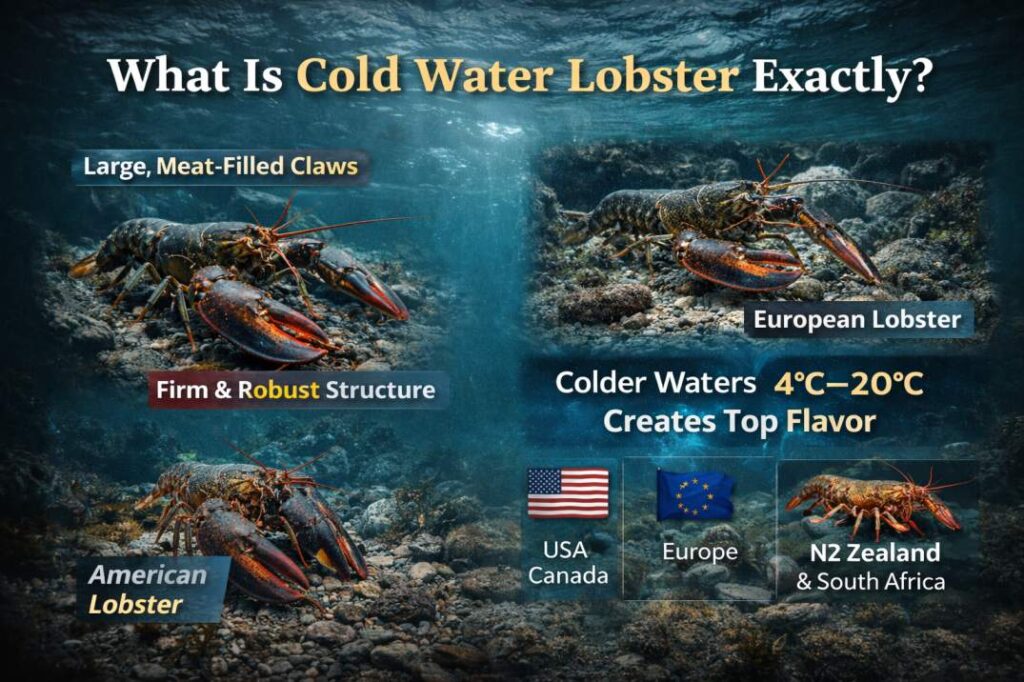
First, I would like to share a biological fact with you that will help you become a more informed buyer. It will enable you to understand that “cold water lobsters” do not constitute a distinct or separate species; rather, the name simply reflects their habitat—the cold waters in which they reside. This specific environment also exerts a significant influence on the lobster’s growth, flavor, and the texture of its meat.
Now, let’s explore why they are so highly prized within the culinary world of seafood. Unlike warm-water lobsters (which typically feature numerous spines but lack claws), cold-water lobsters possess a set of exceptional characteristics that make them immensely popular among seafood enthusiasts:
- Large, meat-filled claws
- A firm and robust physical structure
- A higher yield of meat
The most renowned variety among them is the “Maine Lobster,” which is frequently regarded as the absolute finest in the entire realm of seafood.
The primary cold water lobster species you will encounter are:
American lobster: The cold North Atlantic waters of Maine, Canada, Massachusetts, and Nova Scotia. According to NOAA Fisheries, American lobster is the most valuable single-species fishery in the United States, with annual landings consistently exceeding $1 billion in dockside value.
European lobster: Found in the cold waters of the North Atlantic and Mediterranean. Lesser-known but highly priced.
New Zealand rock lobster: From the cold Southern Ocean waters around New Zealand. A spiny lobster with no large claws but exceptional meat quality.
South African cold water lobster: Another spiny lobster from cold Benguela Current waters off South Africa. Widely exported as frozen tails to the USA and prized for consistent meat quality.
Scientific Insight:
According to NOAA (National Oceanic and Atmospheric Administration), American lobsters live in waters between 4°C and 20°C, which slows their metabolism and growth rate. The slower growth means denser muscle fibers and exceptional flavor.
What Does Cold Water Lobster Taste Like?
From my personal experience, I will describe the flavor to you in simple terms, enabling you to decide whether or not to purchase it. Based on every instance I have tasted lobster:
Cold-water lobster possesses the following characteristics:
- A naturally sweet flavor
- A firm yet slightly resilient texture
- A clean taste, devoid of any fishy odor
Why does cold-water lobster taste better?
The primary reason lies in their habitat; they reside exclusively in cold waters, which results in slower growth, fibrous muscle tissue, and an exceptionally fine flavor.
Cold Water Lobster Meat: What Makes It Special?
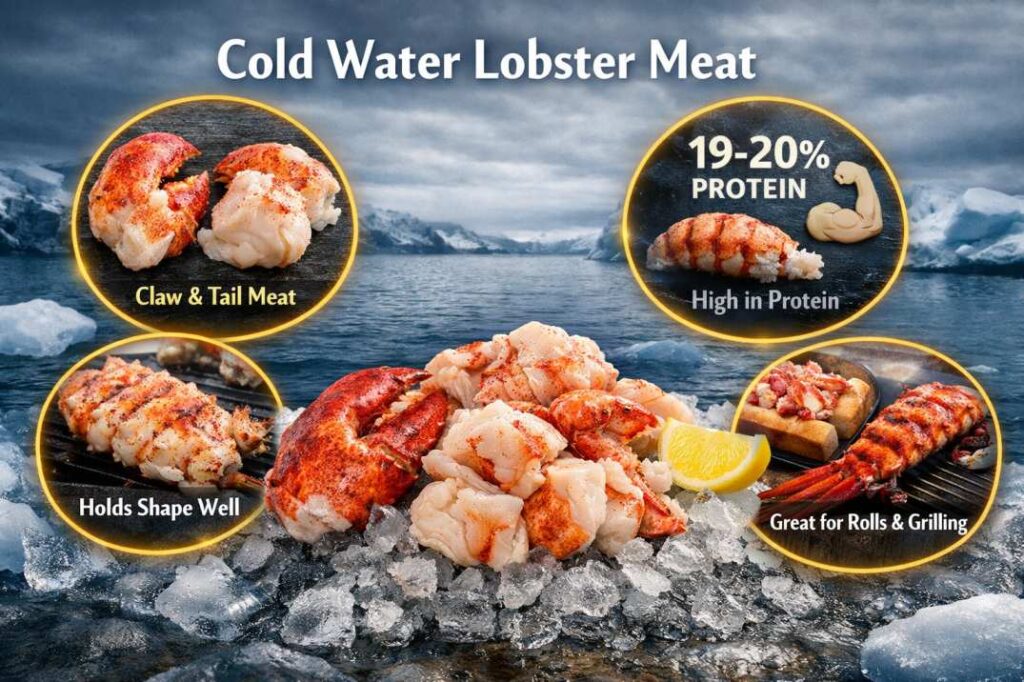
Cold water lobster meat is considered premium because of the following reasons:
- It comes from both claws and tail
- It has a higher protein density
- It holds its shape better when cooked
- It is best for making rolls, grilling, and boiling
Lobster meat is about 19–20% protein, making it a high-quality lean seafood option according to USDA data.
Why Is Cold Water Lobster Expensive?
I think there are four main reasons:
- Slow Growth Rate: Cold-water lobsters take longer to grow, which translates to a limited supply.
- High Demand: There is increasing demand among chefs and seafood enthusiasts worldwide.
- Abundant Meat: Unlike warm-water lobsters, you get excellent meat from both their claws and their tails.
- Fishing Regulations: Strict fishing laws (particularly in the US and Canada) prevent overfishing.
The NOAA Fisheries manages lobster fisheries very strictly; this includes size limits, harvesting methods, trap restrictions, and seasonal controls to ensure sustainability.
All of these factors drive up the price, but they also guarantee the product’s quality. If you want a cheaper one, you can try warm water lobster.
Cold Water vs Warm Water Lobster — Full Comparison Table
| Type of Lobster | Cold-Water Lobster | Warm-Water Lobster |
| Primary species | American, European, NZ rock lobster | Caribbean spiny, Brazilian spiny |
| Water temperature | Below 50°F | Above 70°F |
| Claws | Yes (American, European) | No — tail only |
| Meat texture | Firm, dense | Softer, looser |
| Flavor profile | Sweet, complex, briny | MSC-certified options available |
| Growth rate | 5–7 years to market size | 2–3 years to market size |
| Wild vs farmed | Almost exclusively wild | Mostly wild, some farmed |
| Shell appearance | Uniform, mottled brown-green | Spotted, banded patterns |
| USA retail price (tail) | $35–$65 per tail | $15–$30 per tail |
| Best cooking method | Steam, broil, grill — simple preparations | Works better in sauced dishes |
| Nutritional protein (per 3.5oz) | ~19g protein, 89 calories | ~17g protein, 95 calories |
| Sustainability certification | MSC certified options available | Varies widely by source |
Is Cold Water Lobster Better?
Yes, it is better in most cases.
Choose cold-water lobster if:
- If you Choose Taste and Quality over price
- You want a premium seafood experience
- You enjoy firm, sweet meat
You may skip it if:
- If you can’t afford
- You only need lobster tail for basic recipes
From my experience, once you try cold-water lobster, you will not like other lobsters.
Cold Water Lobster Tail: What You Should Know (Buying Guide)
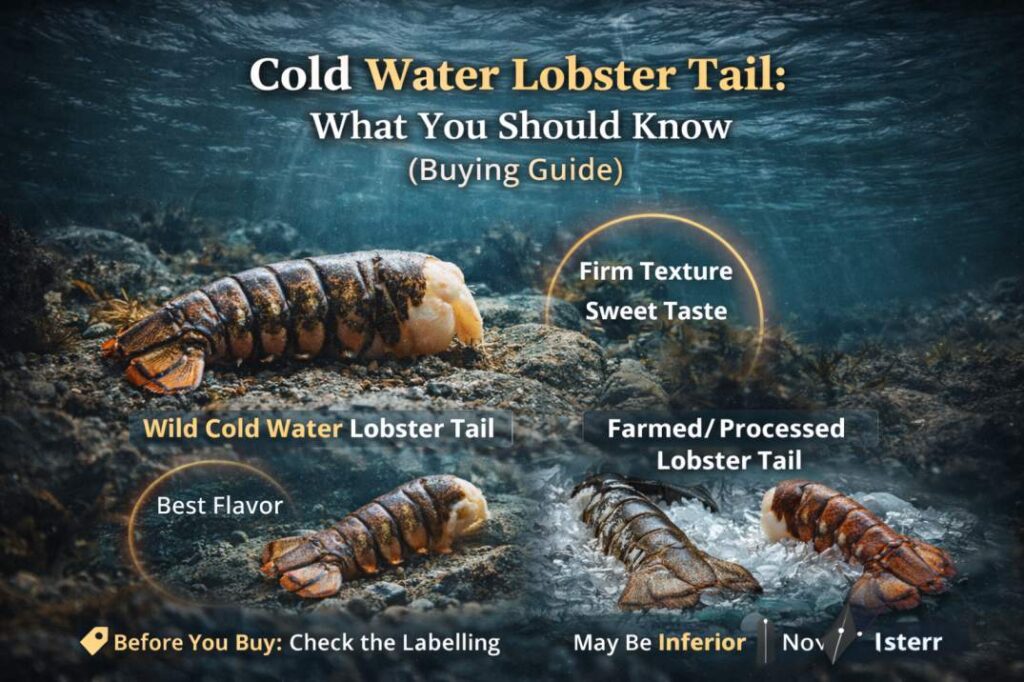
Many people don’t buy whole lobsters; they only buy lobster tails.
What is cold water lobster tail?
It’s the tail portion taken from cold-water lobsters, known for its firm texture, sweet taste, and easy cooking.
Wild cold water lobster tail vs others
- Lobster is caught from the wild. Due to the habitat, it has a better and stronger flavor, which is a result of its natural diet
- Farmed/processed may not taste at the level of wild lobster.
👉 Before you buy: Always check the labelling.
Cold Water Lobster Claws: The Hidden Treasure
Most beginners ignore this — but claws are actually the best:
- More tender
- Slightly sweeter
- Easier to eat
👉 This is something warm water lobsters don’t offer.
🛒 Where to Buy Cold Water Lobster (Important Buying Guide)
Now let’s talk practically, because this is where most people get confused. Follow these to Identify Genuine Cold Water Lobster When Buying.
You have 3 main options:
- Online Seafood Stores
Best for: Fresh frozen lobster tails and Home delivery
Buy only if: The lobster’s origin is clearly mentioned (Maine/Canada), flash-frozen labeling, and good customer reviews
- Local Fish Markets
Best for: Fresh whole lobster and better pricing sometimes
Ask before you buy: Where was it sourced from? And is it cold water lobster?
- Supermarkets (Limited but possible)
Best for: Easy and convenience
I personally do not recommend it because the quality can vary a lot.
Cold Water Lobster Tail vs Whole Lobster: What Should You Buy?
| Option | Best For |
| Lobster Tail | For the first time, easy cooking |
| Whole Lobster | Full experience, more meat variety |
Is Cold Water Lobster Worth Buying?
Yes, and actually, it is very good if you value quality. By buying this lobster, you are actually paying for better taste, better texture, and more meat. Although this is not everyday food, it’s a premium experience.
FAQs
- What is cold-water lobster?
Cold water lobster is a clawed lobster found in colder oceans, known for its sweet and firm meat. - Is cold-water lobster better than warm-water lobster?
Yes, in terms of taste, texture, and meat quality. - Why is cold water lobster expensive?
Due to slow growth, high demand, and strict fishing regulations. - What does cold water lobster taste like?
It tastes sweet, clean, and slightly rich with a firm texture. - Can you buy cold-water lobster tail?
Yes, and it’s one of the most popular forms available. - Is frozen cold-water lobster good?
Yes, if it is properly flash-frozen. - Do cold-water lobsters have claws?
Yes, and they contain a significant amount of meat. - Which is better, lobster tail or whole lobster?
Depends on your preference — tail for ease, whole for full experience.
Now you know what cold water lobster is — but catching one is a completely different challenge.
These lobsters live in harsh, cold ocean conditions, and catching them requires skill, patience, and the right techniques.
👉 See exactly how it’s caught: How to Catch Lobster (Complete Guide for Every Method)
👉 What do lobsters actually eat? Lobster Diet Explained (Foods, Habits & Facts)
👉 What hunts lobsters in the wild? Top 5 Powerful Lobster Predators in the Ocean
Final Thoughts
Finally, I can say that cold-water lobster isn’t just “better seafood”, it’s a completely different experience. If you’re someone who truly enjoys seafood, this is something you should try at least once. And if you’re planning to buy, don’t rush; choose the right type, source, and form.
Was this guide helpful?
First-Hand Experience
Based on animals I've personally kept and bred - not summarized from other articles.
Zoological Foundation
Claims are checked against my M.Sc. Zoology training and published aquatic biology research, not recycled aquarium myths.
No Paid Influence
No sponsorship shaped this guide. Affiliate links, if any, are disclosed separately and never hidden.
Kept Current
Errors are corrected as soon as they're found, with the update noted at the bottom of the article.

Anil Satak M.Sc. Zoology · Founder, FishioHub
Grew up in a fishing family in India and holds a Master's in Zoology. FishioHub is a one-person operation - every guide is personally researched, kept-tested, and written by Anil. No team, no outsourced writers, no AI-generated content. Read his full bio →