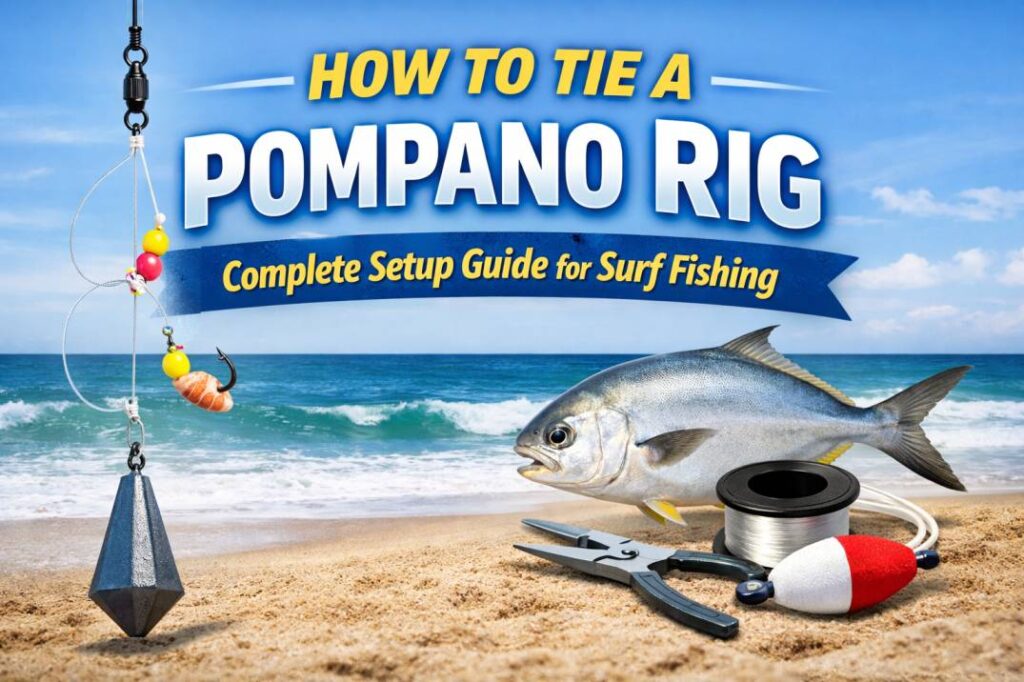
If you did any kind of surf fishing earlier, chances are you’ve already heard about the pompano rig. It’s one of the most popular and effective rigs for catching pompano. Now you can understand why it is called a pompano rig. This rig is best, especially in sandy surf conditions where these fish actively feed near the bottom.
I created this post because when I searched for information on the Pompano rig, most of the top results were either videos with very little information or basic articles that didn’t properly explain why this rig works so well. So in this guide, I’ll explain everything clearly – from the setup to the knots and its use in real-world surf fishing.
What will this guide provide you with? Whether you’re new to surf fishing or simply looking to improve your setup, this guide will help you understand and use this wonderful surf fishing rig correctly.
What you’ll get in this post 🎣
- ✅ What a pompano rig is and why it works so well
- 🪝 How to tie a pompano rig step by step
- 🌊 Best pompano rig setup for surf fishing
- 🎈 How floats and beads help attract pompano
- 🧵 Best knots to use for strength in surf
- 🛒 DIY vs store-bought pompano rig boards
- ⚠️ Common mistakes most anglers make
What Is a Pompano Rig?
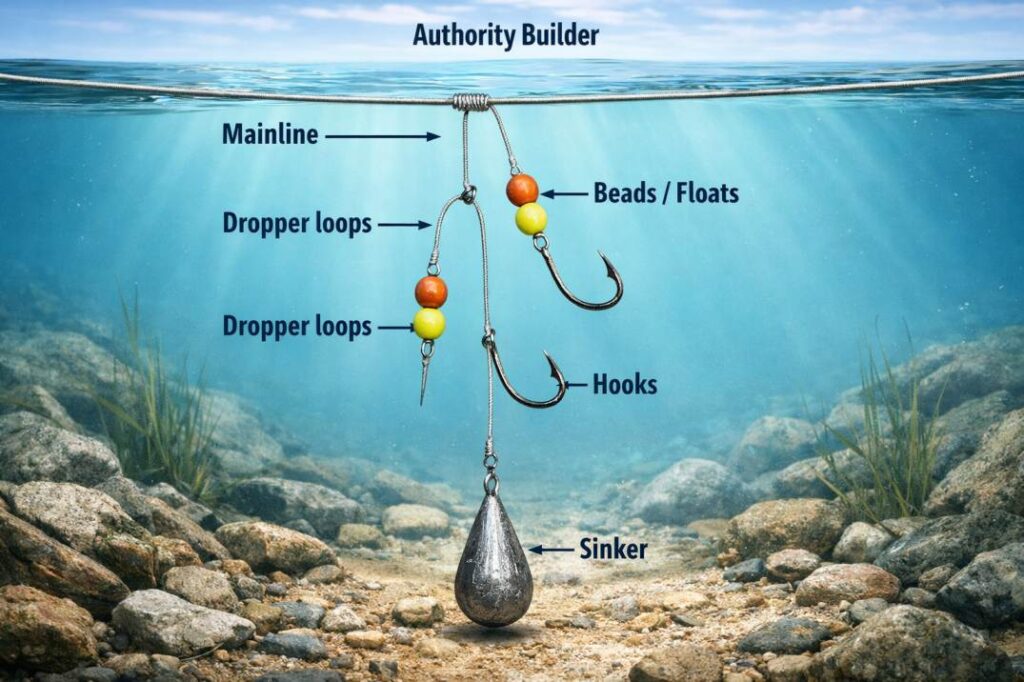
To catch pompano, you need a bottom rig, specifically one that keeps the bait in the pompano’s feeding zone, which is typically a sandy bottom. A pompano rig is a type of bottom fishing rig that features a sinker and one or two short dropper loops with small hooks and colorful beads or floats attached.
This rig is ideal for:
- Keeping the bait slightly above the sandy bottom.
- Allowing you to see the bait even in choppy water.
- Presenting the bait naturally in the pompano’s feeding zone.
The Salty Pompano Rig is essentially the same as the pre-made, popular pompano rigs sold by major brands. Whether you buy one from a store or make your own, the setup and concept of the pompano rig remain the same.
Why the Pompano Rig Works So Well for Surf Fishing
Understanding the feeding behavior of pompano explains why the this rig is so effective for surf fishing. It’s quite simple. This rig works so well because it mimics the pompano’s natural feeding habits.
Pompano are:
- Bottom feeders
- Constantly searching the sand for clams, sand fleas, and small crustaceans
- Often feeding in moving water
The floats and beads on the pompano rig:
- Lift the bait slightly off the bottom and
- Prevent it from getting buried in the sand
- Make it easier for the fish to find the bait in murky water
These characteristics make this fishing rig ideal for:
- Sandy beaches
- Moderate waves
- Shallow to medium-depth surf zones
Pompano Rig Setup (Complete Overview)
A standard pompano rig setup looks simple, but each component has its own purpose.
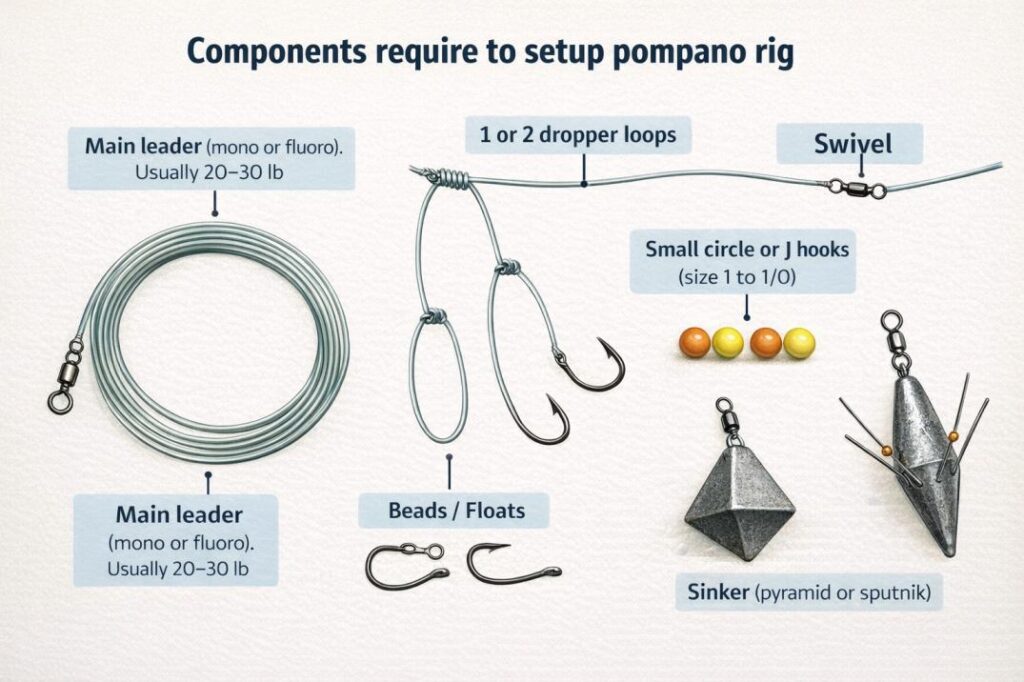
Basic components:
- Main leader (usually 20–30 lb mono or fluoro)
- 1 or 2 dropper loops
- Small circle or J hooks (size 1 to 1/0)
- Beads or floats
- Sinker (pyramid or sputnik)
- Swivel at the top
This setup keeps everything stable in the surf while still allowing free bait movement.
Pompano Rig Board (Pre-Tied Rigs)
A pompano rig board is simply a pre-tied rig wrapped around a foam or plastic holder. These are popular because:
- They save time
- They’re consistent
- Great for beginners
Pros:
- Ready to fish
- Clean knot work
- Easy to store
Cons:
- More expensive than DIY
- Limited customization
If you fish often, learning to tie your own rig gives you more control over hook size, spacing, and float style.
Pompano Rig Floats, Beads, and Colors
Pompano rig floats are one of the most important parts of the rig.
They:
- Lift the bait off the bottom
- Add visual attraction
- Help bait move naturally in waves
Common options:
- Foam floats
- Hard plastic beads
- Bead + float combo
Color tips:
- Clear water → white, chartreuse is always the best option
- Murky water → You can go with orange, pink, or yellow floats
- Bright sun → Use subtle colors, float for visual in sunny day
- Low light → Use brighter beads to make visibility better
Float in any rig always matters; it is a crucial part to indicate or visualize the fish bite. This is one area where small changes can make a big difference.
How to Tie a Pompano Rig (Step-by-Step)
Learning how to tie a pompano rig isn’t hard, and once you do it a few times, it becomes second nature.
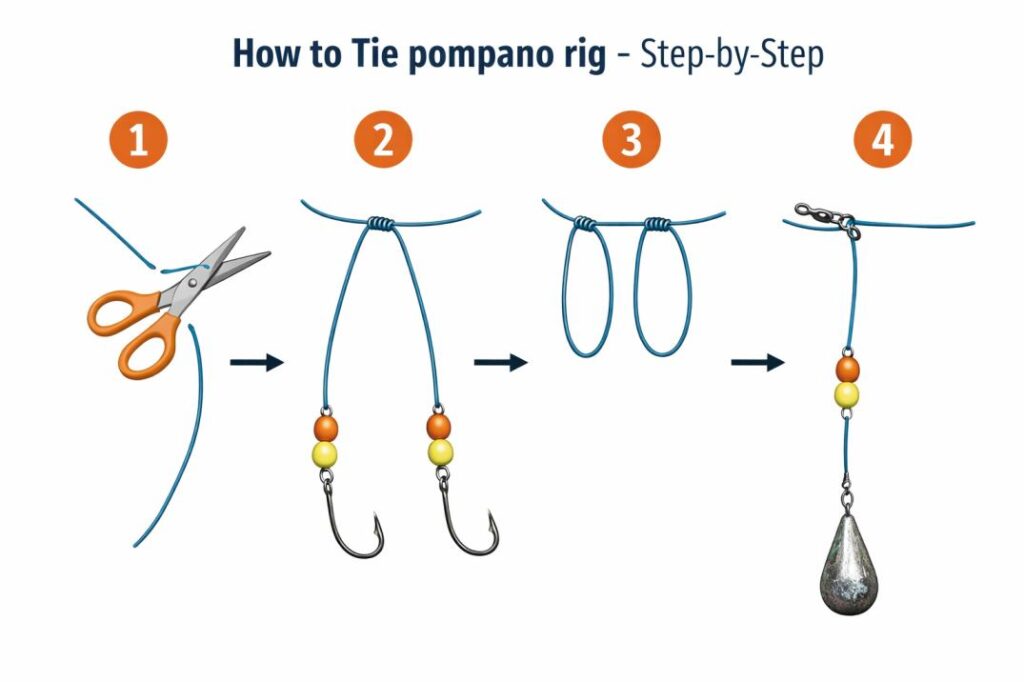
What you need:
- Leader line
- Hooks
- Beads/floats
- Swivel
- Sinker
Rig Setup Instructions:
- First, cut a leader approximately 24–30 inches long.
- Tie a swivel to the top.
- Create your first dropper loop.
- Add a bead/float and tie on a hook.
- Repeat for the second dropper (optional).
- Tie a sinker loop at the bottom.
This simple structure is what makes the pompano rig so easy for beginners.
The Best Pompano Rig Knots (That Will Hold Up in the Surf)
Choosing the right knot for your rig is crucial in surf fishing because your line is constantly under pressure. In this situation, the knot needs to be strong.
In my opinion, the best knots for you are:
- Dropper Loop Knot (most common)
- Surgeon’s Loop
- Improved Clinch Knot (for the hook)
- Palomar Knot (for the swivel)
We’re discussing these because the dropper loop knot performs several important functions. It keeps the hook straight, prevents tangling in the rig if tied correctly, and most importantly, keeps the rig strong in the waves.
DIY vs. Store-Bought Pompano Rigs (Salty Pompano Rigs)
I often see many anglers using pre-packaged Salty Pompano rigs in May — and there’s nothing wrong with that, in my opinion. Premade rigs work just as well as homemade ones. However, there are some differences to consider when it comes to customization.
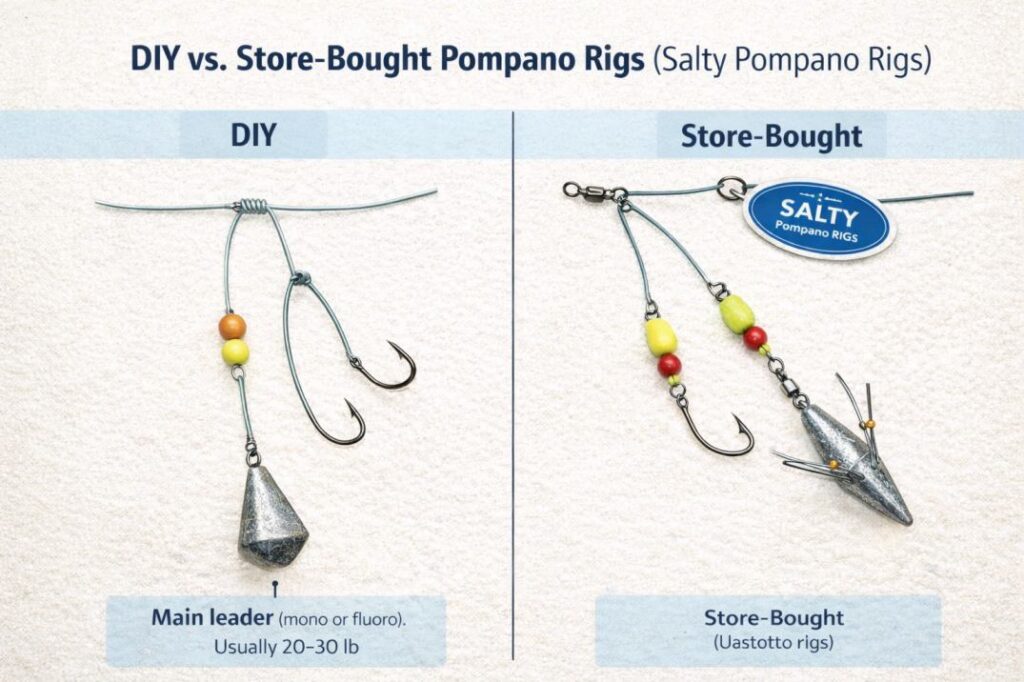
DIY rigs are better if:
- You want custom spacing
- You frequently change hook sizes
- You fish in varying surf conditions
Store-bought rigs are better if:
- You’re new to surf fishing
- You value convenience
- You don’t want to tie knots on the beach
In my opinion, you should try both.
Common Rig Mistakes (Avoid These)
You’ll find that many anglers struggle with this rig due to the small mistakes they make. These include:
- Using hooks that are too large for the rig.
- Using a float that is too large or too buoyant (more than necessary).
- Using a leader that is too long, which increases the risk of tangling.
- Fishing in rocky areas.
- Ignoring the strength of the waves.
These are some common mistakes. Correcting them will lead to better results and double your success rate.
When Not to Use the Pompano Rig
Avoid using the this bottom fishing rig in these locations and situations:
Do not use it in these conditions:
- Avoid this rig if you are fishing in rocky or snag-prone areas.
- Do not choose this rig if you are targeting large and aggressive fish.
- Also, do not use the Pompano rig if you are fishing in very calm, still water. In such situations, other rigs will perform better and yield better results.
FAQs
1. What type of setup works best for catching pompano from the beach?
A simple bottom setup with short leaders, small hooks, and a weighted sinker performs best from the beach. It keeps bait near the sandy bottom where pompano actively feed.
2. How far apart should the hooks be on a surf fishing setup?
Hooks are usually spaced 6–8 inches apart to prevent tangling while still allowing multiple baits to move naturally in the current.
3. What sinker shape holds best in strong surf?
Pyramid and sputnik sinkers are the most effective in strong surf because they dig into the sand and prevent the line from drifting.
4. What hook size is ideal for targeting pompano?
Small hooks in the size range of #1 to #4 work well since pompano have small mouths and often feed on sand fleas and shrimp.
Final Thoughts
The bottom fishing rig has earned its reputation for a reason. It’s simple, effective, and perfectly suited for surf fishing conditions where pompano feed.
If you understand:
- Proper setup
- Correct knot choice
- How floats affect presentation
You’ll quickly see why this rig is trusted by so many surf anglers. Take the time to rig it right, and it can easily become one of your most reliable surf fishing setups.