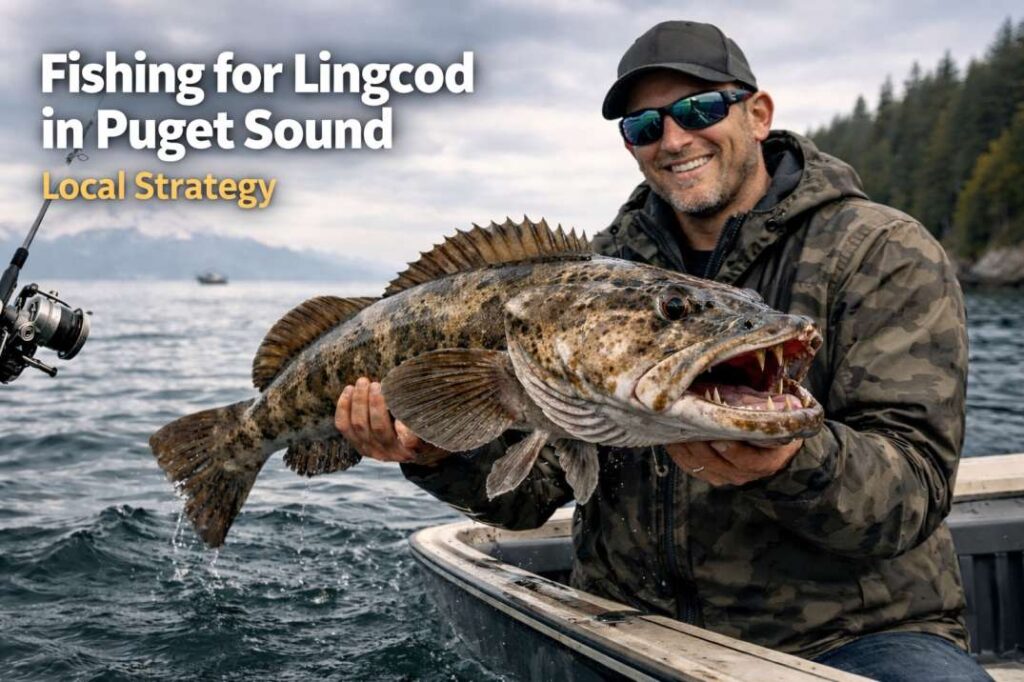
Most anglers trying fishing for lingcod in Puget Sound fail for one simple reason—they never fish where lingcod actually live. I’ve seen people drift for hours over empty water, while the fish were sitting just a few feet away—right next to structure.
Once you understand how lingcod behave in Puget Sound, catching them becomes predictable.
👉 What you’ll get in this post:
- 🎯 Understanding Fishing For Lingcod (Habitat & Behaviour )
- ⚙️ Exact spots and structure where to catch lingcod
- 🧠 : How to Fish for Lingcod in Puget Sound
- ❌ Proven gear and setup and mistakes
- 🐟 Bonus: other types of fish in Puget Sound you can target
⚡ Quick Lingcod Strategy (If You’re in a Hurry)
- 🎯 Target rocky structure in 40–120 ft
- ⚙️ Use heavy jigs or swimbaits
- 🌊 Fish during slack or slow tide
- 🐟 Stay close to the bottom at all times
Understanding Fishing For Lingcod in Puget Sound
Before casting your line into the water, keep this in mind: To catch Lingcod, you must first understand their habitat. Lingcod are bottom-dwelling predators that have a strong preference for rocky terrain.
They do not roam around aimlessly like Salmon. They are cunning hunters:
- Lingcod inhabit rocky piles, reefs, and ledges.
- Rather than chasing prey over long distances, they strike from ambush.
- They attack with explosive speed—but only when your lure is within their strike zone.
This is precisely why many anglers fail at ling cod fishing in Puget Sound—because they do not know where to look for them, and end up fishing too far above the bottom.
Where to Catch Lingcod in Puget Sound
If you’re wondering where to catch lingcod in Puget Sound, focus on 3 things: Ling cod holding areas, mainly structure, depth to fish, and known locations where lingcod exist more.
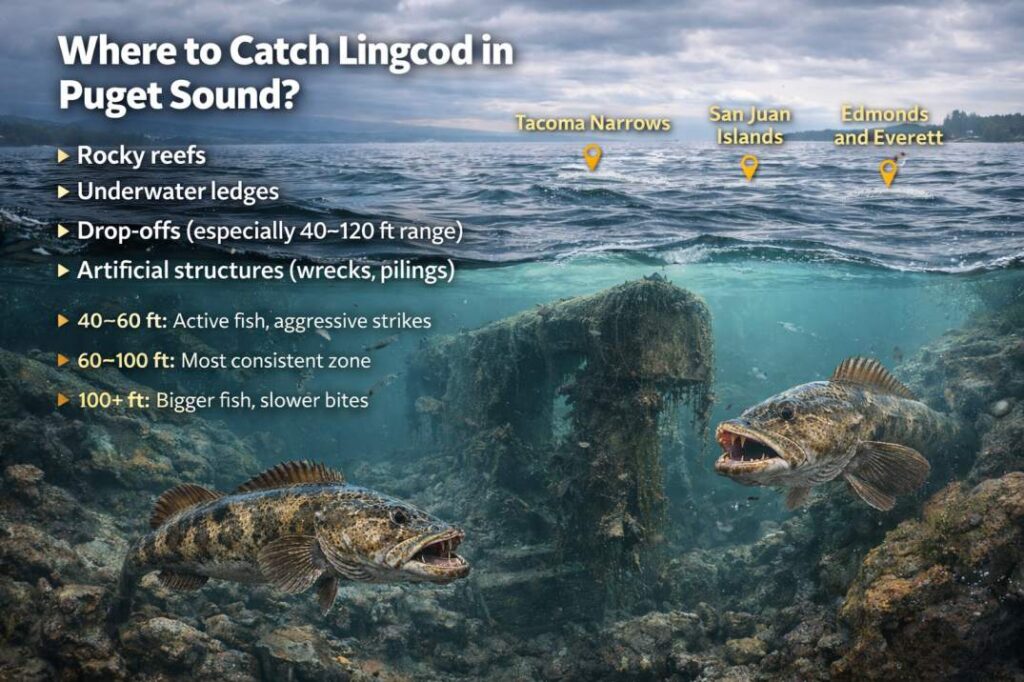
🔥 Best Lingcod Holding Areas:
- Rocky reefs
- Underwater ledges
- Drop-offs (especially 40–120 ft range)
- Artificial structures (wrecks, pilings)
📏 Best Depth Strategy for Lingcod
- 40–60 ft: Active fish, aggressive strikes
- 60–100 ft: Most consistent zone
- 100+ ft: Bigger fish, slower bites
🎯 Known Puget Sound Lingcod Spots:
- Fish in the areas around the Tacoma Narrows
- San Juan Islands structure zones
- Admiralty Inlet
- Rocky bottoms near Edmonds and Everett
👉 These are classic Puget Sound lingcod spots where fish consistently hold.
🎣 A Simple Scenario (What I’d Do)
If I were fishing for lingcod in Puget Sound today, I’d head straight to a rocky drop-off near 80 ft, drop a swimbait to the bottom, and slowly work it up. If I don’t get a bite in 10–15 minutes, I move—because lingcod are there or they’re not.
How to Fish for Lingcod in Puget Sound (Fishing Methods That Actually Work)
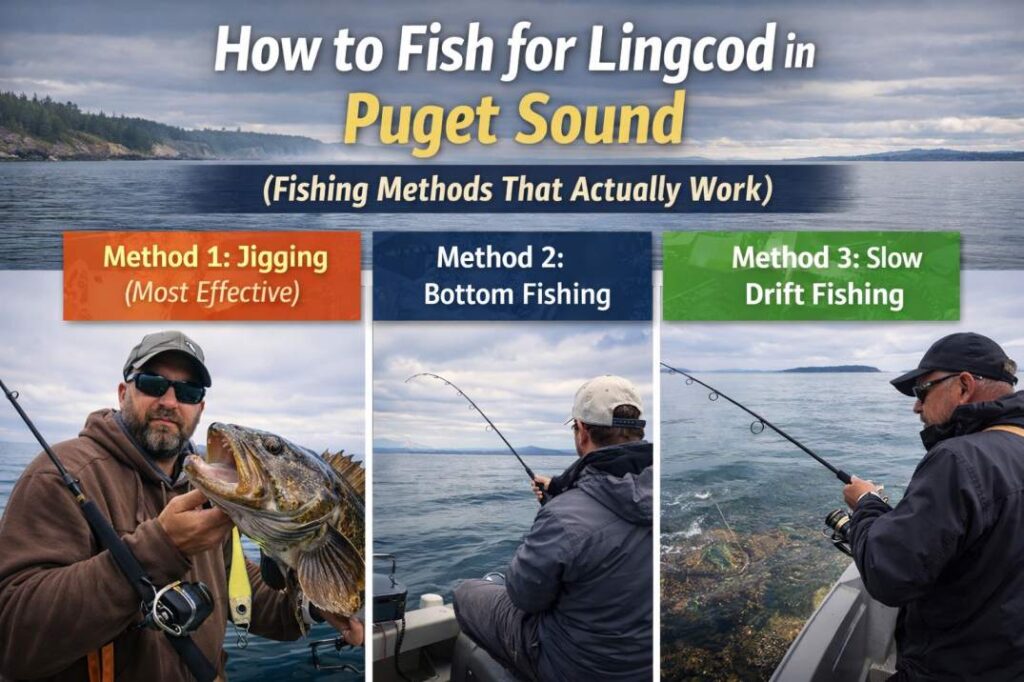
This is the most crucial part, and your success at catching Lingcod in Puget Sound depends entirely on it. For Lingcod, I prefer these three methods:
Method 1: Jigging (Most Effective)
- Use heavy jigs (2–8 oz, depending on depth)
- Drop straight down to the bottom
- Lift and drop with slow, controlled movements
👉 Lingcod often hit when jigs are on the drop, so stay alert.
Method 2: Bottom Fishing
- Best to use live bait or soft plastics
- Keep bait just above the structure
- Minimal movement—let the fish come to you
Method 3: Slow Drift Fishing
While drifting slowly over structural areas, adjust your weight according to the current to ensure your setup remains stable and under control. Aim to maintain constant contact with the bottom, as that is where Lingcod reside and where most strikes occur.
Best Gear Setup for Lingcod
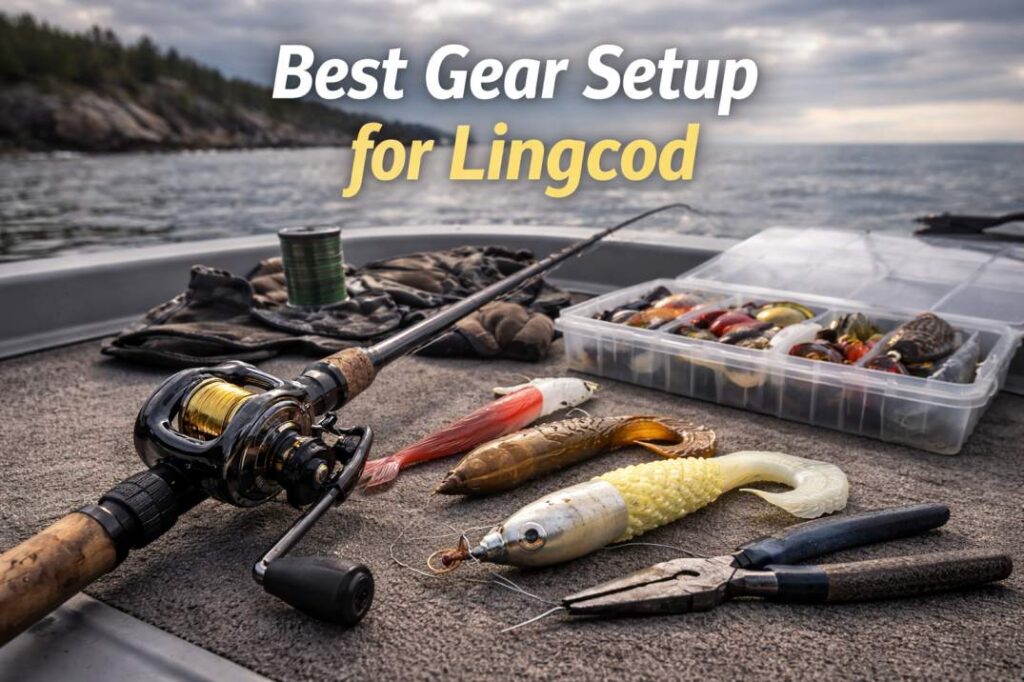
For successful ling cod fishing, your gear must handle aggressive strikes and heavy structure.
Recommended Setup:
- Rod: Medium-heavy to heavy (fast action ROD)
- Reel: Strong spinning or conventional reel
- Line: 30–65 lb braided line
- Leader: 20–40 lb fluorocarbon
Best Lures:
- Soft plastic swimbaits
- Leadhead jigs
- Large grub tails
👉 Since ling cod stays at the bottom, bright colors often work better in deeper water.
Best Time to Catch Lingcod
Best season: Spring to early summer
Best tide: Slack tide or slow current
Best time of day: Early morning
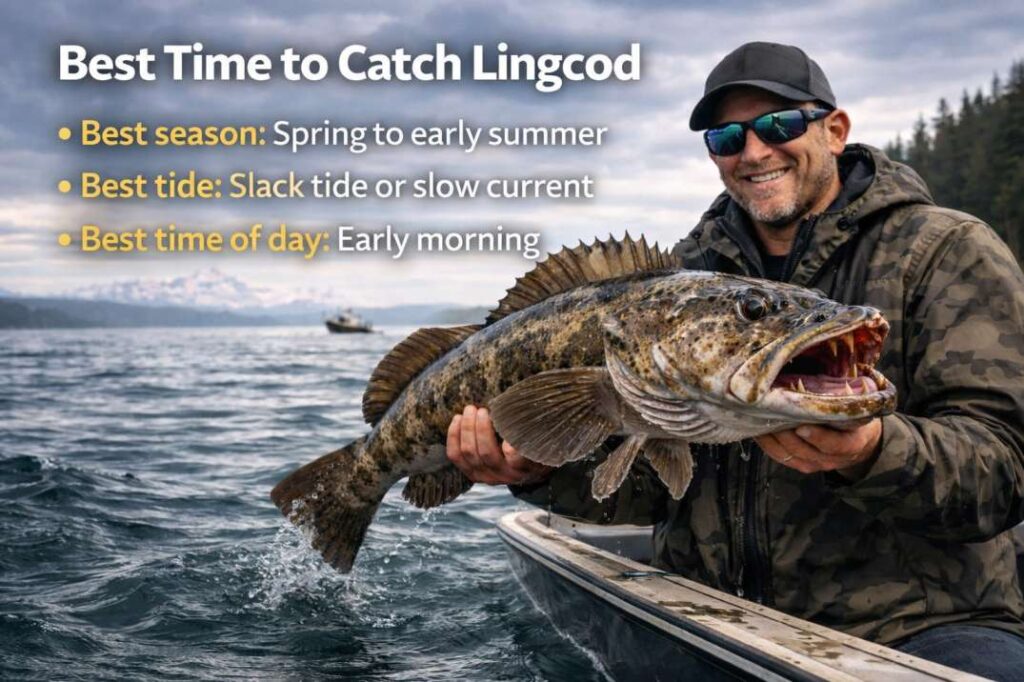
Timing matters more than you think—especially when targeting lingcod in structure-heavy waters.
📅 Weather
The best time to catch Lingcod is typically from spring through early summer, when the fish are more active and can be easily found in shallower waters.
🌊 Conditions
Lingcod feed most actively when the tides are calm or the current is slow, allowing your lure to remain near the bottom. Early mornings often yield better results, as the fish tend to be feeding more heavily during this time.
⚡ Key Point
Lingcod are most active when conditions allow your lure to stay close to the bottom.
Mistakes to Avoid When Fishing for Lingcod in Puget Sound
Most failures in ling cod fishing in Puget Sound come down to these:
- Fishing too high from the bottom
- Ignoring structure and fishing in a flat area is a mistake because lingcod love structures
- Using light gear, you will end up losing fish and gear
- Moving too fast, because lingcod prefers to attack on calmed things
🐟 Caught a lingcod? Don’t cook it yet.
Read my guide to learn if it’s worth eating—and the surprising reason its meat can turn bright blue.
👉 Is Lingcod Worth Eating?
👉 The Truth Behind Blue Lingcod Meat
Types of Fish in Puget Sound (Quick Overview)
The ecosystem here in Puget Sound is rich, which makes it perfect for multi-species fishing. Many anglers always ask, What Fish Can You Catch in the Puget Sound? so due to the vast and diverse ecosystem, you can target many popular species here, along with lingcod.
Angers can catch Lingcod, Chinook & Coho Salmon, Halibut, Rockfish varieties, and Dungeness crab (not a fish, but worth noting). This diversity is why anglers love fishing in this region.
How to Fish for Lingcod in Puget Sound (My Honest Take)
- Find rocky structure using sonar or charts
- Position your boat over 40–120 ft depth
- Drop your jig to the bottom
- Use slow, controlled lifts
- Stay in contact with the bottom at all times
❓ FAQs
Is lingcod fishing good in Puget Sound?
Yes—Puget Sound is one of the best places to target lingcod due to its structure-rich seabed.
What is the best depth for Fishing for Lingcod in Puget Sound?
Typically between 40-120 feet, but it can vary.
Are lingcod aggressive?
Very—they often strike hard and without warning.
What is the best bait for Fishing for Lingcod in Puget Sound?
Soft plastic swimbaits and large jigs work best for lingcod in Puget Sound.
Can beginners catch lingcod in Puget Sound?
Yes, beginners can catch lingcod by fishing near structure and staying close to the bottom.
Final Thoughts
If you’ve struggled with ling cod fishing in Puget Sound, don’t overthink it. Focus on structure, stay near the bottom, and fish with patience. That’s the difference between going home empty… and landing your first lingcod.